

Sodium-ion battery technology on the rise; Foton Energy sells its first C&I system in Australia
Published Date : 2026-August-13, Thursday
Sodium-ion battery technology is continuing to develop and
attract more attention as an alternative power storage medium. Last week an
Australian startup PowerCap announced it had developed the first Western
sodium-ion battery to receive TÜV and PPP certification, an internationally
recognised and accepted minimum standard benchmark for structural and
electrical product safety.
This week Melbourne-based Foton Energy, exclusive distributor for Cospowers energy storage systems, announced it had sold its first 100kW / 200kWh sodium-ion C&I Battery Energy Storage System in Australia, helping to move the emerging technology forward “out of the discussion and demonstration stage and into a real commercial project”.
AltEnergy asked Foton Energy Director Krishna Thota for some background about Na-ion batteries, with particular reference to their potential in the utility/large-scale BESS project sector.

AE: What are the key advantages of sodium-ion batteries
compared with other battery technologies?
Krishna: Sodium is abundant, widely available and
geographically diverse, which has the potential to provide greater long term
supply chain security and price stability for growing energy markets globally.
Na-ion also has some compelling technical characteristics as it performs
particularly well across a wide range of temperatures, has strong power
capability, attractive safety characteristics and cycle life.
Na-ion cells can also be transported and stored at very low states of charge, which can provide additional logistics and safety advantages. Na-ion currently has a lower gravimetric energy density than leading LFP chemistries, so it is unlikely to replace LFP everywhere. But for commercial, industrial and utility scale storage, where weight and physical footprint are generally less critical than safety, lifetime, cost and supply chain resilience, Na-ion is very attractive.
Krishna: Sodium is abundant and inexpensive, and Na-ion
chemistry can reduce exposure to lithium and other critical material price
volatility. As manufacturing volumes increase, we expect Na-ion costs to
decline substantially.
LFP currently benefits from enormous manufacturing scale and a very mature supply chain, which has driven lithium battery prices to historically low levels. Today, Na-ion and LFP are broadly competing for the same energy market, but we shouldn’t simply say that Na-ion is already cheaper in every case.
AE: Can Foton’s Na-Ion batteries be scaled up to utility capacity size?
Krishna: Absolutely. The 100kW/200kWh system we are
introducing into Australia is our commercial and industrial configuration, but
the same Na-ion technology is available in much larger, containerised formats.
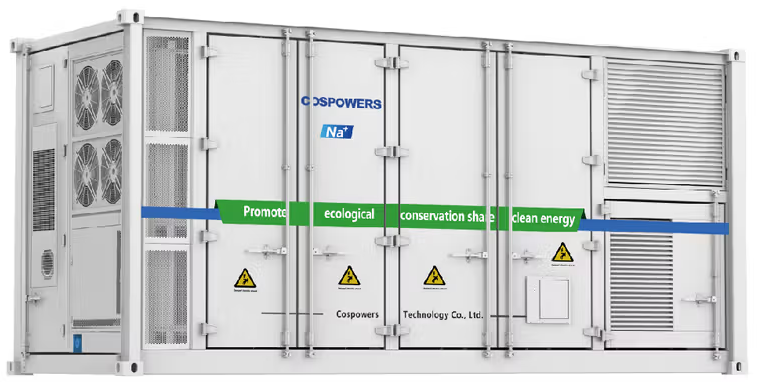
Our technology partner Cospowers has developed the EnerGalactic-2418-Na, a
utility scale Na-ion platform with approximately 2.4MWh of energy storage per
unit. Multiple units can be deployed in parallel, allowing projects to scale
from a few MWh into tens or potentially hundreds of MWh, depending on the project
design.
From an engineering perspective, there is nothing about Na-ion chemistry that restricts it to smaller systems. In fact, C&I and utility scale storage is potentially one of the strongest applications for Na-ion because the slightly lower energy density compared with LFP is much less important when the battery is installed permanently on a site.
Foton therefore sees the 100kW/200kWh system as the beginning of sodium-ion deployment in Australia, rather than the limit of the technology. As the market develops, we expect sodium-ion to increasingly compete for larger C&I and utility-scale projects.
AE: Have Foton batteries been used in utility-scale projects in other parts of the world?
Krishna: Yes. Foton’s battery systems are based on
technology from our manufacturing partner, Cospowers, which has significant
experience in large scale energy storage internationally. Cospowers has delivered
more than 23GWh of cumulative lithium battery shipments, with operations
covering nearly 70 countries and regions.